

Inland
El Poble (the old town)
The original town, a couple of kilometres back from the water, built around the church. The part that carries on in February.
Three separate towns wearing one name — an inland old town, a working port, and a beach strip — with coves between them.
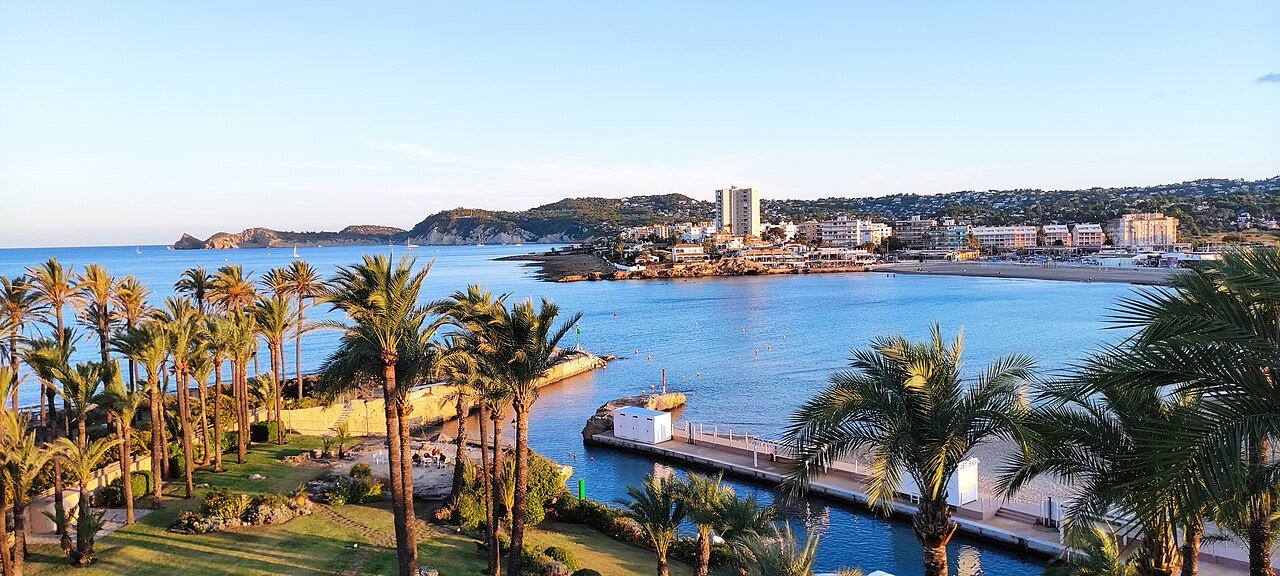
South of Dénia around the Cap de la Nau headland, Xàbia is a strongly international town, and a spread-out one. The old town sits inland, the port a kilometre away, the Arenal beach strip further round again; which one you live in decides what your stay is like.
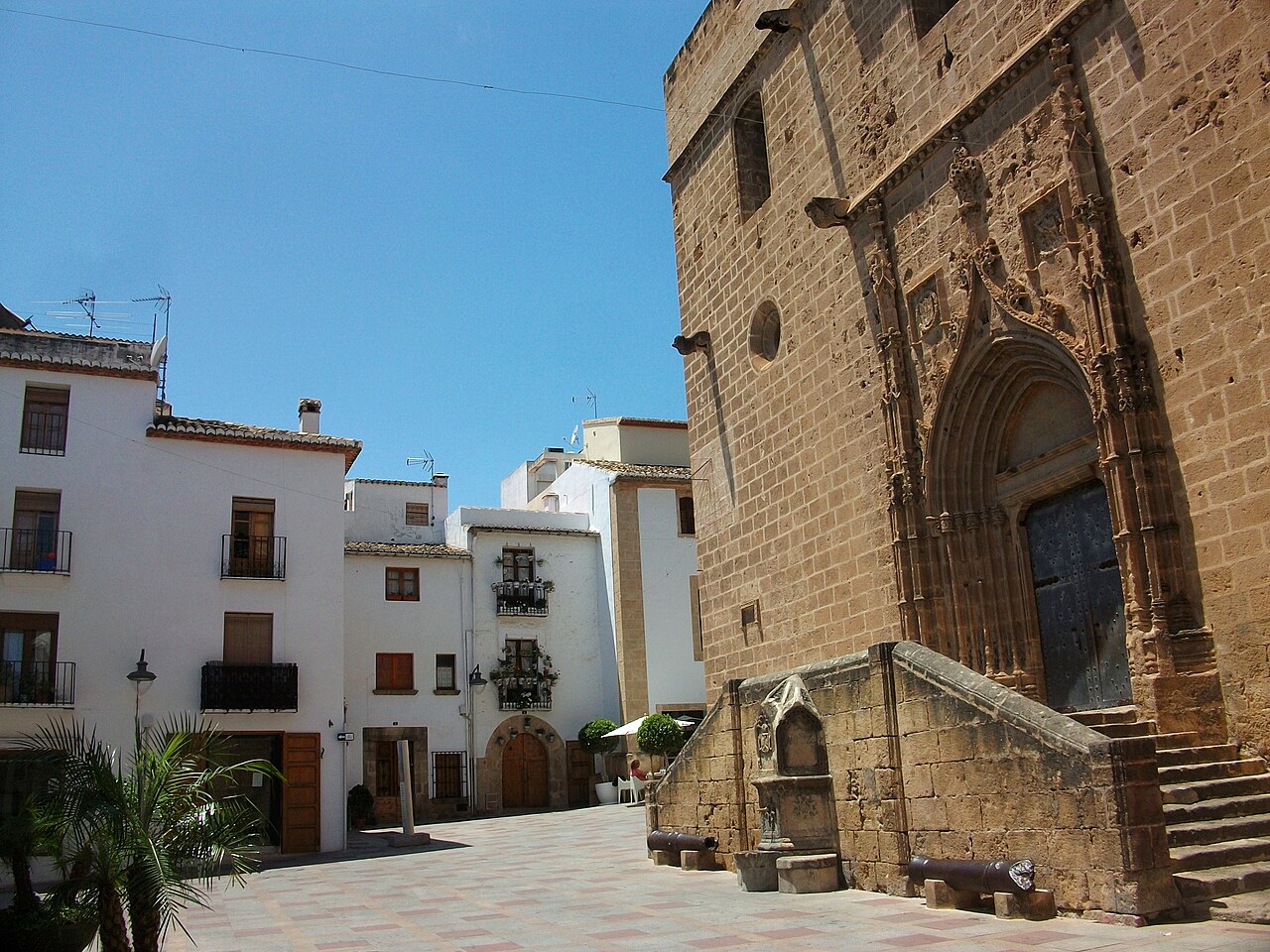
Photographs: Francesc Fort, CC BY-SA 4.0 · Joanbanjo, CC BY-SA 3.0
Which part of town you land in decides what the stay is like — more than the town itself does.
The original town, a couple of kilometres back from the water, built around the church. The part that carries on in February.
The working port and the seafront restaurants, with the fish market at the centre of it.
The one sandy beach and the strip of bars behind it — the summer machine, and the emptiest place on this coast in January.
Xàbia is three places wearing one name. The old town sits about two kilometres inland, walled until the walls came down between 1868 and 1873, and built in whitewash and the local golden tosca stone1. The port sits below Cap de Sant Antoni. The Arenal — the only sandy beach — runs to under a kilometre1.
The coast between and beyond them carries four capes: Sant Antoni, Cap Negre, Cap Martí, and Cap de la Nau, the largest2.
Half the resident population is foreign, and more than two-thirds of the annual visitors2. That is the highest share of any town covered here, and it decides small things all day — which language a counter opens in, which businesses bother staying open in February.
The mean temperature runs around 18 °C across the year1. Autumn is the wet season and it arrives as gota fría: very intense rain in a short time, with September, October and November the wettest months1.
Xàbia is often sold on its microclimate, with a superlative attached. That claim circulates without a source behind it, so it is not printed here.
Spain is unusually well wired. FTTP reached 89% of premises in 2021 against an EU average of 34%, and connections of at least 100 Mbit/s reached 72%3. What that does not settle is a town spread across three centres and the hill between them.
TK: what a connection measures in each of the three, and whether the coworking that existed at Sun and Co. has any successor. Nobody from this project has stayed in Xàbia.
The space profiles say what each house is like to live in, including who it does not suit.