The centre
Around the market
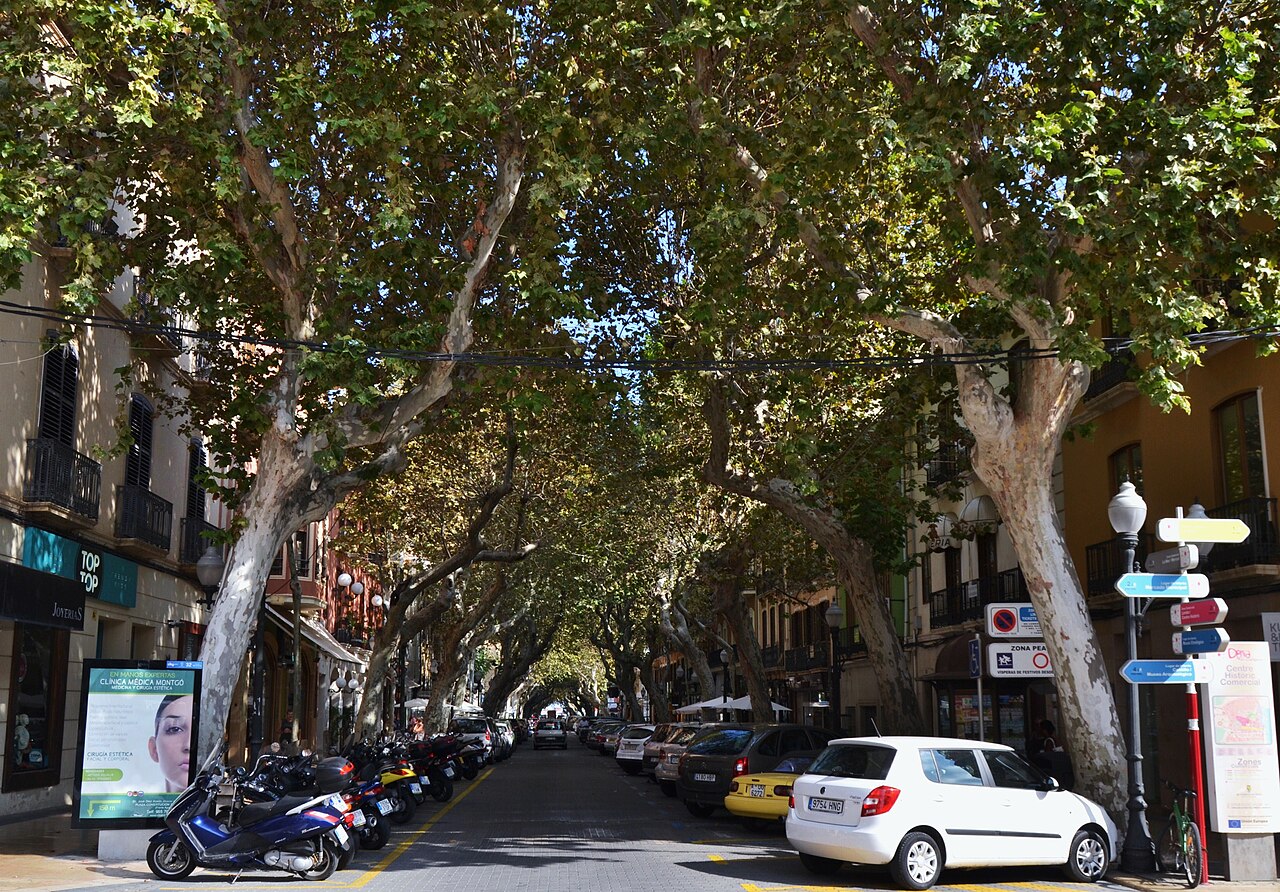
The working middle of town — market, shops, the streets behind the castle. Flat, walkable, and open in winter.
A working harbour town with a castle in the middle of it, a mountain behind it and ferries to the Balearics leaving from the end of the street.
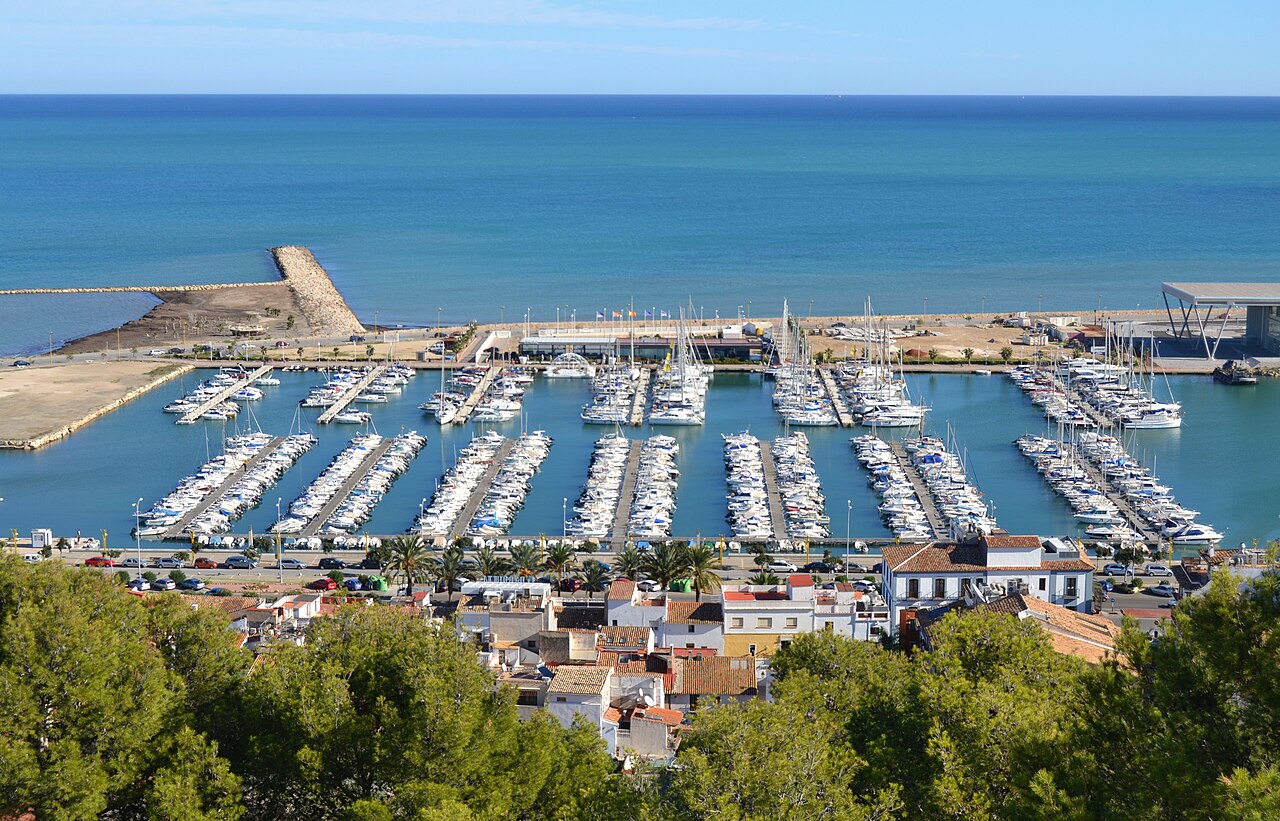
The northern gateway to the Costa Blanca, and a self-sufficient small town — a real port with a real winter, rather than a resort that empties in October. The Montgó massif sits behind the town and the ferry terminal sits in front of it.
Photographs: Joanbanjo, CC BY-SA 3.0 · Joanbanjo, CC BY-SA 4.0
Which part of town you land in decides what the stay is like — more than the town itself does.
The working middle of town — market, shops, the streets behind the castle. Flat, walkable, and open in winter.
The former fishermen's quarter between the centre and the port. Low houses, narrow streets, and the part of town people photograph.
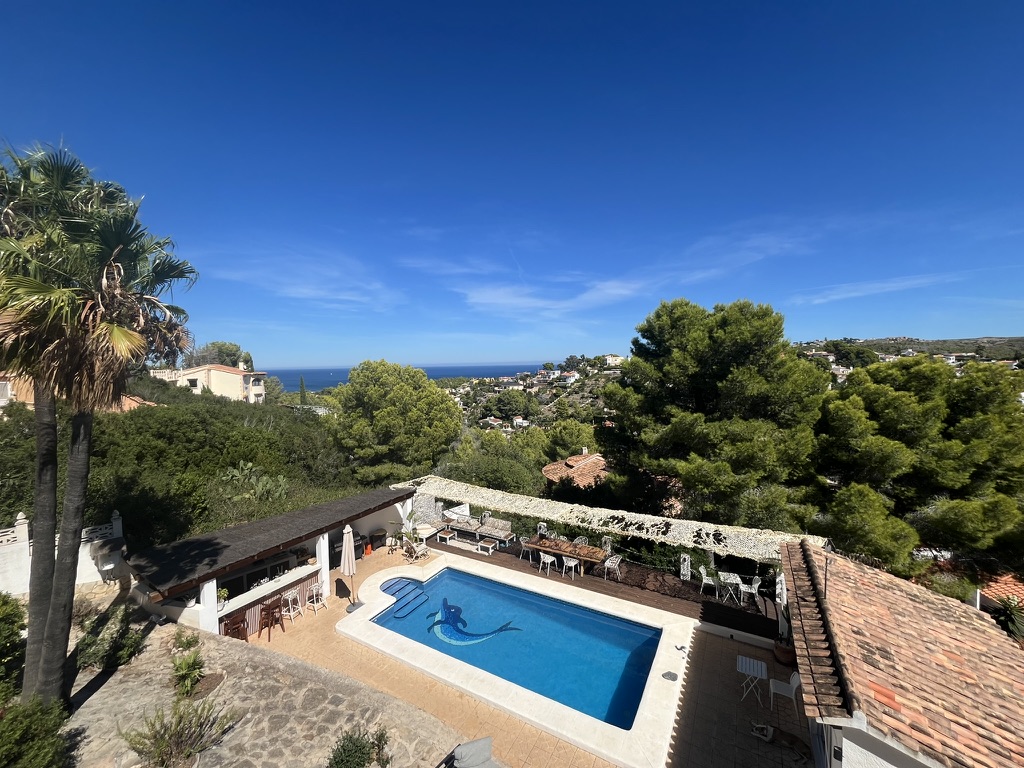
Villas and urbanisations on the slope behind Dénia, where most of the larger houses are. Views, quiet, and a walk down that is not a walk back up.
Assume you need a car here until somebody proves otherwise.
Dénia has been a UNESCO Creative City of Gastronomy since December 2015, one of forty-seven cities admitted to the network that year1. What that buys the town is a trade rather than a plaque: UNESCO counts more than 500 businesses in the sector and around 2,500 direct jobs1.
The other half of the town’s working life leaves from the end of the street. Baleària runs Dénia to Ibiza in two hours on the fast ferry, and on to Palma in about five and a quarter including the call at Ibiza2.
Rail is the weak link. TRAM line 9 terminates here and runs down the coast to Benidorm; Alicante needs a change there onto line 13. There is no mainline station.
Mediterranean in the textbook sense — Köppen Csa, January averaging about 12 °C, August about 26 °C, and roughly 2,750 hours of sun a year4.
The figure that actually matters is the rain. Dénia takes around 750 mm a year, more than 300 mm of it in autumn, and it arrives in short violent bursts across roughly fifteen stormy days4. Benidorm, an hour down the same coast, gets 291 mm in a whole year5. Same region, two and a half times the water. An October here is not the same proposition as an October there.
Spain is unusually well wired. FTTP reached 89% of premises in 2021 against an EU average of 34%, and connections of at least 100 Mbit/s reached 72%6. Fibre in a town of 47,000 is the expectation rather than the prize.
The hillside above the town is the part to ask about, address by address, before signing anything.
TK: what a connection here actually measures, and which coworking spaces are still trading. Nobody from this project has stayed in Dénia, so those lines stay empty until somebody has.
The space profiles say what each house is like to live in, including who it does not suit.